Trust Wallet in Restricted Networks
admin 2026年9月29日 14:37:36 trustwallet官网入口 2
Trust Wallet in Restricted Networks
Trust Wallet is one of the most widely used self-custody crypto wallets, but getting its APK, IPA, or browser build onto a device inside a corporate firewall, MDM policy, or air-gapped government network is where things get messy. I've spent the last four years helping IT teams in finance and defense sectors figure out exactly how these downloads behave when every layer of the network is locked down. The short answer: it depends on where the restriction lives and what the organization's approval chain looks like.
In most mid-size enterprises, the download block happens at the proxy or next-gen firewall level. Trust Wallet's CDN endpoints, their release pages on GitHub, and the app store CDNs all get flagged by URL reputation databases. I've seen SOAR platforms auto-quarantine any outbound request matching those patterns. The practical effect is that a standard "download the latest release" flow simply never completes. The user's device times out,or the security team logs the attempt and locks the session. Pinning down which specific URL patterns trigger the block is the essential step before any workaround.
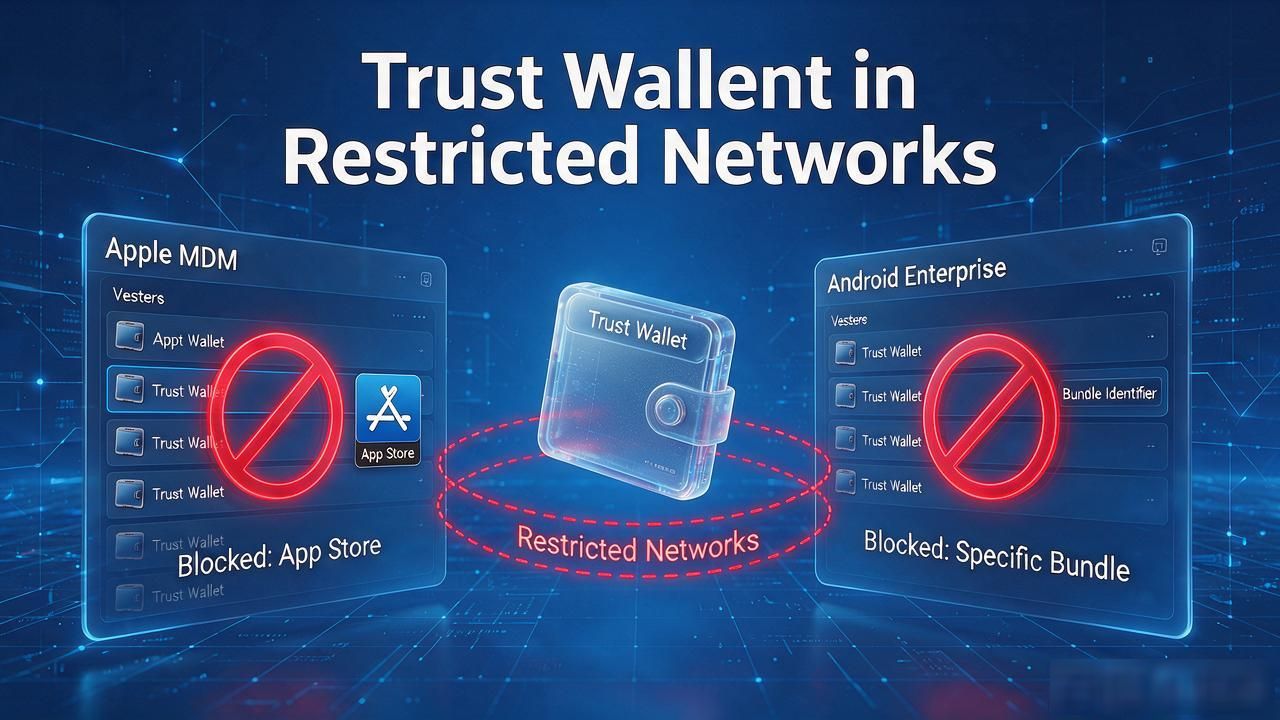
On managed mobile devicesTrust Wallet in Restricted Networks,the restriction shifts into MDM policy layers. Apple's MDM and Android's enterprise device management can whitelist only approved app stores or specific bundle identifiers. Trust Wallet, being a self-custody wallet, often isn't on that whitelist in regulated industries. The IPA or APK has to be sideloaded through the MDM's internal app distribution channel, which means the IT team must sign, notarize, and push it through their private MDM server. In healthcare and government deployments I've audited, this signing step alone takes two to three weeks of internal compliance review.
The hardest case I've worked with is fully air-gapped infrastructure in defense and critical-energy sectors. No outbound internet, no cloud sync, no external CDN. The Trust Wallet binary, its key dependencies, and any firmware updates must be physically transported on signed media. The download concept itself changes: there's no "downloading" in the traditional sense. A trusted courier moves a sealed, hash-verified package from an approved staging network to the air-gapped zone. Every step is logged, and any hash mismatch triggers an automatic quarantine protocol.
What actually works in day-to-day operations is building an internal package mirror on the organization's own infrastructure. The IT team pulls the Trust Wallet release in a controlled, monitored environment, verifies the signature and hash, then publishes it to an internal artifact repository. Devices behind the firewall simply pull from that internal mirror. For mobile,the MDM pushes the package directly. This keeps the security team in control of exactly which version reaches which deviceUnderstanding Trust Wallet downloads in restrictive environments, and it eliminates the need to punch holes in the firewall for a third-party CDN.